Business Name: BeeHive Homes of Plainview
Address: 1435 Lometa Dr, Plainview, TX 79072
Phone: (806) 452-5883
BeeHive Homes of Plainview
Beehive Homes of Plainview assisted living care is ideal for those who value their independence but require help with some of the activities of daily living. Residents enjoy 24-hour support, private bedrooms with baths, medication monitoring, home-cooked meals, housekeeping and laundry services, social activities and outings, and daily physical and mental exercise opportunities. Beehive Homes memory care services accommodates the growing number of seniors affected by memory loss and dementia. Beehive Homes offers respite (short-term) care for your loved one should the need arise. Whether help is needed after a surgery or illness, for vacation coverage, or just a break from the routine, respite care provides you peace of mind for any length of stay.
1435 Lometa Dr, Plainview, TX 79072
Business Hours
Monday thru Sunday: 9:00am to 5:00pm
Facebook: https://www.facebook.com/BeeHivePV
YouTube: https://www.youtube.com/@WelcomeHomeBeeHiveHomes
Families rarely start exploring senior care due to the fact that life is calm and simple. Usually there has actually been a fall, a hospitalization, a wandering event, or a quiet realization that a spouse or adult child is stressing out. Emotions run high, choices feel permanent, and the market of options can look like a maze: intimate little homes, sprawling resort-style schools, specialized memory care, short-term respite care, and everything in between.
This guide concentrates on an option lots of households battle with: a little home assisted living environment compared to big, resort-style senior living complexes. Both designs can supply high quality elderly care. Both can also stop working terribly if the match between resident and setting is wrong.
I have actually walked numerous families through this choice. The best outcomes practically never ever originated from chasing after the most beautiful lobby. They come from understanding compromises, seeing past the marketing language, and lining up a neighborhood's style with a resident's real day-to-day needs.
Two Extremely Different Designs of Assisted Living
Assisted living is a broad term. In practice, it covers whatever from a six-bed home on a quiet cul-de-sac to a 300-unit complex with several dining establishments and a sports bar. Both might lawfully be "assisted living," yet they feel as various as a bed and breakfast and a cruise ship.

What "little home" assisted living generally looks like
Small home assisted living, sometimes called residential care homes, board-and-care, or group homes, typically involves a regular house that has been adjusted for elderly care. Licensing guidelines vary by state, but a lot of these homes serve between 4 and 16 residents.
The environment tends to be casual. You may discover:
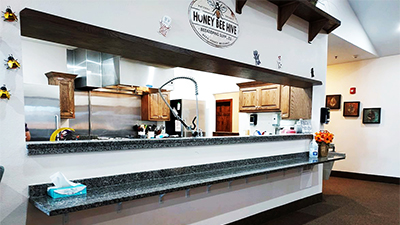
- A single open cooking area where personnel prepare meals in view of locals A shared living space with comfortable furnishings rather of rows of armchairs Bedrooms that seem like regular bedrooms rather than hotel systems A little lawn or outdoor patio instead of landscaped strolling trails
Care staff are typically never far away. The same caretaker might help someone wake, gown, shower, and consume breakfast. Regimens bend around private residents more quickly since there are just fewer people to coordinate.
Families who tour often state, "This feels like a home, not a facility." For some locals, that familiarity lowers stress and anxiety and supports a gentler transition out of independent living.
What resort-style senior living complexes typically offer
Resort-style complexes can include assisted living, independent living, and often memory care and skilled nursing on the very same campus. It prevails to see a number of hundred citizens across multiple structures. The physical plant resembles a hotel, resort, or upscale condominium community.
These communities emphasize features and way of life: several dining venues, lecture halls, pools, fitness centers, beauty salons, chapels, and arranged transport. Activity calendars can run numerous pages long. The environment feels busy and social.
Care still matters, of course, but it exists inside a bigger hospitality framework. Personnel roles are more segmented. Dining staff serve meals, activities personnel run programs, and care assistants visit citizens in their apartments based on scheduled care plans.
Some households tour these neighborhoods and believe, "I wish to live here myself." Others, specifically those taking care of frailer parents, fret that the scale and rate may overwhelm their enjoyed one.
Both impressions can be right, depending upon the person who will live there.
A Side-by-Side Look: Scale, Staffing, and Daily Life
Because marketing products blur distinctions, it assists to compare crucial elements in an uncomplicated way.
Here is an at-a-glance contrast of typical distinctions, remembering that specific communities can vary:
Size and design Staffing patterns Social environment Flexibility of regimens Medical and care intricacySmall homes typically suggest shorter hallways, fewer faces to find out, and a constant rhythm everyday. Resort-style complexes suggest more choices, more people, and more range in between a resident's front door and any offered amenity.
Families in some cases ignore how exhausting long passages can become after a hospitalization or surgical treatment. I have viewed homeowners who as soon as strolled the entire shopping mall all of a sudden restrict themselves to the café downstairs just due to the fact that it is closer and they feel safer.
On the other hand, I have also seen fairly robust 80-year-olds grow in a hectic, resort-like setting, using up water aerobics, bridge, and language classes that simply would not exist in a little home.
Assisted Living: When Each Setting Fits Best
Assisted living, in theory, is for seniors who do not need 24-hour nursing however can not live fully individually. In practice, assisted living communities serve a vast array of residents.
Residents who frequently prosper in little homes
A small home model frequently works well for people who:
- Tire easily or have actually restricted mobility Feel distressed or baffled in crowds Need frequent cues or supervision Prefer quiet, familiar surroundings
Residents with moderate cognitive disability, including early to mid-stage dementia, can feel more secure in a smaller, contained environment where everyone understands their habits. Staff are more likely to see subtle modifications: a smaller hunger, a new cough, or rising confusion in the late afternoon.
I remember one gentleman with Parkinson's who had actually moved from a large, elegant complex into a 10-bed home after multiple falls. In the bigger setting, staff were kind however just might not see him as often as he needed. In the little home, his caregiver would hear his walker bump the doorframe and show up before he could lose his balance completely. The change in fall frequency was dramatic.
Residents who often flourish in resort-style assisted living
Resort-style settings suit residents who:
- Are still relatively mobile and socially inclined Enjoy structured activities and prepared outings Value a sense of self-reliance and privacy Want range in food and home entertainment
Someone who has always been a "joiner" might find the little scale of a residential home suppressing. For example, a retired instructor who liked committees and neighborhood theater may feel stimulated by a big book club, a drama group, and weekly lectures. A huge campus can offer an almost college environment, as long as the resident can physically and cognitively gain access to what is offered.
The key judgment is not age, however functional status and personality. Two 88-year-olds can have hugely various requirements. One might be taking yoga classes and organizing a knitting circle. The other may be recovering from a stroke and scared by unfamiliar surroundings.
Memory Care Considerations in Each Setting
Many households look for assisted living when early indications of dementia appear. Memory care is a customized kind of senior care created for individuals with Alzheimer's illness and other dementias, and it is offered both in little homes and in big resort-style complexes.
Memory care in small home settings
In a small home, memory care frequently integrates into the basic assisted living environment instead of existing as a separate locked system. This can work well for:
Residents in early to mid-stage dementia who are calm, not vulnerable to wandering, and take advantage of steady, foreseeable faces. The little scale reduces overstimulation. Personnel can quickly reroute somebody heading towards the wrong bedroom or trying to exit.
However, as dementia progresses, security needs might magnify. Not all residential care homes are equipped for pronounced behavioral challenges, such as aggressiveness, serious roaming, or regular efforts to leave the property. Households need to ask very concrete concerns about how the home manages these situations and respite care what may trigger a transfer to a higher level of care.
Memory care in resort-style communities
Large campuses often have devoted memory care systems, sometimes with secured gardens, specialized activity programs, and personnel trained in dementia communication methods. These units can provide:
Structured programs tailored to cognitive capability, such as music treatment, sensory rooms, or little group activities tuned to much shorter attention spans. Architecturally, they might incorporate circular corridors to enable safe roaming, high-contrast design functions that make navigation easier, and additional security technology.
The compromise is that memory care systems in large communities can feel more scientific and institutional to some families. A resident moving from a private home directly into a locked unit may have problem with the sense of restriction.
Among my previous clients, a common course looked like this: move initially into assisted living on the main school, engage fully while still able, then transition to the memory care wing when roaming or confusion make a secured setting much safer. That continuity can relieve the ultimate move, since staff, regimens, and the general environment stay somewhat familiar.
Respite Care: Attempting Options Without Committing Immediately
Respite care, a short-term remain in a senior neighborhood, can be important for households who are not ready to make an irreversible decision. Some utilize it when a main caregiver requires surgical treatment or rest. Others utilize it as a "trial run" to see how a parent adapts to assisted living.
Both small homes and resort-style complexes might use respite care, however the experience can differ.
In a small home, respite citizens usually sign up with the full daily routine from the first day. Staff quickly find out preferences since there are so couple of individuals to track. Families tell me they value the direct feedback from caregivers, who often offer honest insights into just how much assistance the person truly needs.
In a resort-style community, respite visitors may stay in a supplied apartment, participate in group activities, and dine together with long-lasting locals. This can give households a practical photo of whether the scale and pace suit their loved one. Some find that a parent who appeared introverted in the house ends up being more social when activities and social contact are easy to access.
Respite care likewise reveals covert issues. For instance, a kid might believe his mother needs only light cueing, however during respite stay, personnel might notice she can not safely manage medications or navigate back to her space from the dining room without assistance. Those observations need to inform the last choice of setting.
Cost and Value: How Prices Designs Differ
Both small homes and resort-style complexes run in a private-pay market in many regions, though some accept Medicaid or other subsidies. Households frequently fixate on the base rate, however real cost emerges from the details of the care strategy and what is included.
Small homes often charge an extensive rate that covers space, board, basic personal care, and activities. This simpleness makes budgeting much easier. However, there might be limited tiers of care. If a resident's needs increase substantially, the home might not be able to supply the greater level of assistance, even if the family wants to pay more.
Resort-style complexes usually different housing and hospitality expenses from care expenses. You may see a base rent for the home, a different "care level" fee based upon an assessment, and added fees for services such as incontinence materials or escort help to meals.
Families in some cases encounter "care creep": as needs grow, month-to-month costs increase gradually. That is not necessarily a sign of price gouging. It shows true staffing time. But it can amaze households who allocated just utilizing the preliminary base lease quoted on that first shiny brochure.
When comparing alternatives, it helps to ask each company to approximate forecasted costs not only in the meantime, but for a reasonable scenario 2 to 3 years ahead, assuming some decline. This future-focused view can change the perceived worth of each model.
Family Experience, Communication, and Transparency
A senior care decision impacts the entire household, not just the resident. The way a community communicates, invites involvement, and handles concerns differs substantially in between little homes and big complexes.
In little homes, families typically have direct access to the owner or administrator. If a daughter notifications her father's t-shirt is regularly stained, she can raise the issue and most likely receive a same-day adjustment from the exact same caregiver who helps him each early morning. Communication tends to be casual and immediate.
The intimacy of the setting can, nevertheless, blur borders. Some households feel pressure to participate more than they can. Others find it difficult if character clashes develop, due to the fact that the pool of personnel and residents is so small.
In resort-style communities, interaction is more structured. Families may interact with numerous layers: care supervisors, nurses, activities personnel, and executive directors. Systems for care conferences, composed updates, and formal complaint processes are more common. This can feel expert and comforting, but also more bureaucratic.
The best indication is not the number of personnel titles, however the responsiveness to concerns and issues. A big school that returns calls quickly, shares care notes easily, and welcomes families to participate in care planning might support relatives better than a small home with minimal administrative resources. The reverse can also be true.
Safety, Oversight, and Staffing Realities
Safety concerns normally drive the decision to seek assisted living in the very first location. Each setting handles danger differently.
Small homes rely greatly on personnel attentiveness. With less locals and a compact layout, a caregiver can around "have eyes on" most of your home. This works well when staffing ratios are strong and turnover is low. It falters quickly when one staff member calls out sick or there is no backup coverage.
Large resort-style communities design security into the environment: call systems, locked stairwells, cams in common locations, sprinkler systems, and nurse stations. However, the bigger footprint indicates that a resident who falls at one end of a corridor may wait longer for staff reaction if staffing levels dip.
Families in some cases presume that resort-style automatically implies more medical care. That is not constantly precise. Assisted living guidelines in lots of states limit the kind of medical interventions enabled, regardless of community size. For more complicated medical needs, such as feeding tubes or regular injections, a competent nursing facility may be required.
One useful step is to inquire about staffing ratios by shift, not just "24-hour staff." What looks robust throughout the day might thin out at night. Likewise ask how the neighborhood covers emergency situations, such as several homeowners needing help at once.
Questions To Ask When Exploring Communities
Because marketing language often sounds comparable, it helps to anchor your trips in particular, behavior-focused questions. Throughout visits to both little home assisted living and resort-style complexes, consider asking:
- "If my loved one starts to wander or become more baffled, how would that alter their care strategy and monthly expense?" "Can you describe a recent situation where a resident's needs suddenly increased? How did you handle it?" "How do night shifts work here? How many people are on responsibility and what are they doing when locals are asleep?" "If I call with an issue, who calls me back and in what timeframe?" "What are typical reasons you might ask a resident to transfer to a higher level of care?"
The answers typically reveal more about culture and capacity than any flyer or website.
Matching Personality, History, and Worths to the Setting
Beyond clinical requirements and budget plans, the most effective placements respect individual history and values.
A previous farmer who invested years in open fields may discover a fenced garden in a small home more significant than an indoor pool. A retired executive accustomed to large companies and formal structures might feel at ease within a resort-style school with committees and resident councils.
Cultural and linguistic fit matters too. Little homes sometimes form around particular language groups or cultural practices, providing familiar foods and holidays. Big schools may have more variety in residents and personnel, which can be reassuring or disorienting depending on the individual.
Spiritual needs should not be ignored. Some resort-style senior care communities host routine praise services throughout denominations. Others rely on visiting clergy. Little homes might provide more informal, resident-driven spiritual practices. Families should ask how each setting supports these measurements of life.
Planning for Change Over Time
The hardest part of this decision is that it is made now, while the future trajectory stays unpredictable. A resident may stay stable for several years, or decrease rapidly after a single medical occasion. Excellent planning accepts that needs will change.
Small home assisted living can be an exceptional environment for the middle chapters of elderly care, particularly for those needing constant individual attention. If health ends up being extremely complex or habits become hazardous, a transition to memory care or skilled nursing may still be necessary.
Resort-style complexes that offer a continuum of care permit "aging in place" on one school: independent living, assisted living, memory care, and in some cases nursing care. The resident might move systems, but the overarching neighborhood stays the same. This connection can spare families from repeated searches and relocations.
There is no single right course. Some households intentionally start in a smaller sized, calmer setting, knowing a later move is likely. Others pick a big campus early to develop familiarity before dementia advances.
The most resistant households evaluate the scenario each year. They look truthfully at changes in movement, cognition, mood, and medical requirements, and they weigh whether the current setting still fits.
Bringing All of it Together
Choosing between a small home and a resort-style complex is less about selecting the "much better" design and more about aligning realities.
If your loved one is socially inclined, fairly mobile, and energized by range, a resort-style assisted living community might offer the stimulation and amenities that keep life abundant. If they are quickly overwhelmed, fragile, or require close cueing throughout the day, a little home setting may supply the steadiness and intimacy that support dignity.
Ask comprehensive concerns, consider respite care as a low-risk trial, and pay attention to your own instincts throughout trips. Observe the homeowners' faces, listen to staff conversations, and envision your loved one not on their finest day, but on a bad day, in that environment.
The right option is the one where both the resident and the household can exhale a bit, knowing that care, security, and mankind are being held together, not separately.

BeeHive Homes of Plainview provides assisted living care
BeeHive Homes of Plainview provides memory care services
BeeHive Homes of Plainview provides respite care services
BeeHive Homes of Plainview supports assistance with bathing and grooming
BeeHive Homes of Plainview offers private bedrooms with private bathrooms
BeeHive Homes of Plainview provides medication monitoring and documentation
BeeHive Homes of Plainview serves dietitian-approved meals
BeeHive Homes of Plainview provides housekeeping services
BeeHive Homes of Plainview provides laundry services
BeeHive Homes of Plainview offers community dining and social engagement activities
BeeHive Homes of Plainview features life enrichment activities
BeeHive Homes of Plainview supports personal care assistance during meals and daily routines
BeeHive Homes of Plainview promotes frequent physical and mental exercise opportunities
BeeHive Homes of Plainview provides a home-like residential environment
BeeHive Homes of Plainview creates customized care plans as residents’ needs change
BeeHive Homes of Plainview assesses individual resident care needs
BeeHive Homes of Plainview accepts private pay and long-term care insurance
BeeHive Homes of Plainview assists qualified veterans with Aid and Attendance benefits
BeeHive Homes of Plainview encourages meaningful resident-to-staff relationships
BeeHive Homes of Plainview delivers compassionate, attentive senior care focused on dignity and comfort
BeeHive Homes of Plainview has a phone number of (806) 452-5883
BeeHive Homes of Plainview has an address of 1435 Lometa Dr, Plainview, TX 79072
BeeHive Homes of Plainview has a website https://beehivehomes.com/locations/plainview/
BeeHive Homes of Plainview has Google Maps listing https://maps.app.goo.gl/UibVhBNmSuAjkgst5
BeeHive Homes of Plainview has Facebook page https://www.facebook.com/BeeHivePV
BeeHive Homes of Plainview has an YouTube page https://www.youtube.com/@WelcomeHomeBeeHiveHomes
BeeHive Homes of Plainview won Top Assisted Living Homes 2025
BeeHive Homes of Plainview earned Best Customer Service Award 2024
BeeHive Homes of Plainview placed 1st for Senior Living Communities 2025
People Also Ask about BeeHive Homes of Plainview
What is BeeHive Homes of Plainview Living monthly room rate?
The rate depends on the level of care that is needed. We do an initial evaluation for each potential resident to determine the level of care needed. The monthly rate is based on this evaluation. There are no hidden costs or fees
Can residents stay in BeeHive Homes until the end of their life?
Usually yes. There are exceptions, such as when there are safety issues with the resident, or they need 24 hour skilled nursing services
Do we have a nurse on staff?
No, but each BeeHive Home has a consulting Nurse available 24 – 7. if nursing services are needed, a doctor can order home health to come into the home
What are BeeHive Homes’ visiting hours?
Visiting hours are adjusted to accommodate the families and the resident’s needs… just not too early or too late
Do we have couple’s rooms available?
Yes, each home has rooms designed to accommodate couples. Please ask about the availability of these rooms
Where is BeeHive Homes of Plainview located?
BeeHive Homes of Plainview is conveniently located at 1435 Lometa Dr, Plainview, TX 79072. You can easily find directions on Google Maps or call at (806) 452-5883 Monday through Sunday 9:00am to 5:00pm
How can I contact BeeHive Homes of Plainview?
You can contact BeeHive Homes of Plainview by phone at: (806) 452-5883, visit their website at https://beehivehomes.com/locations/plainview/, or connect on social media via Facebook or YouTube
Visiting the Broadway Park provides scenic overlooks that can be enjoyed by residents in assisted living or memory care during senior care and respite care outings.